


Philadelphia’s New Freedom Theatre was founded in 1966. Two years later, it moved into the historic building at 1346 North Broad Street, where it remains in the 21st century. The three-story brick and brownstone building spans approximately 60,000 square feet. More at philadelphia-trend.
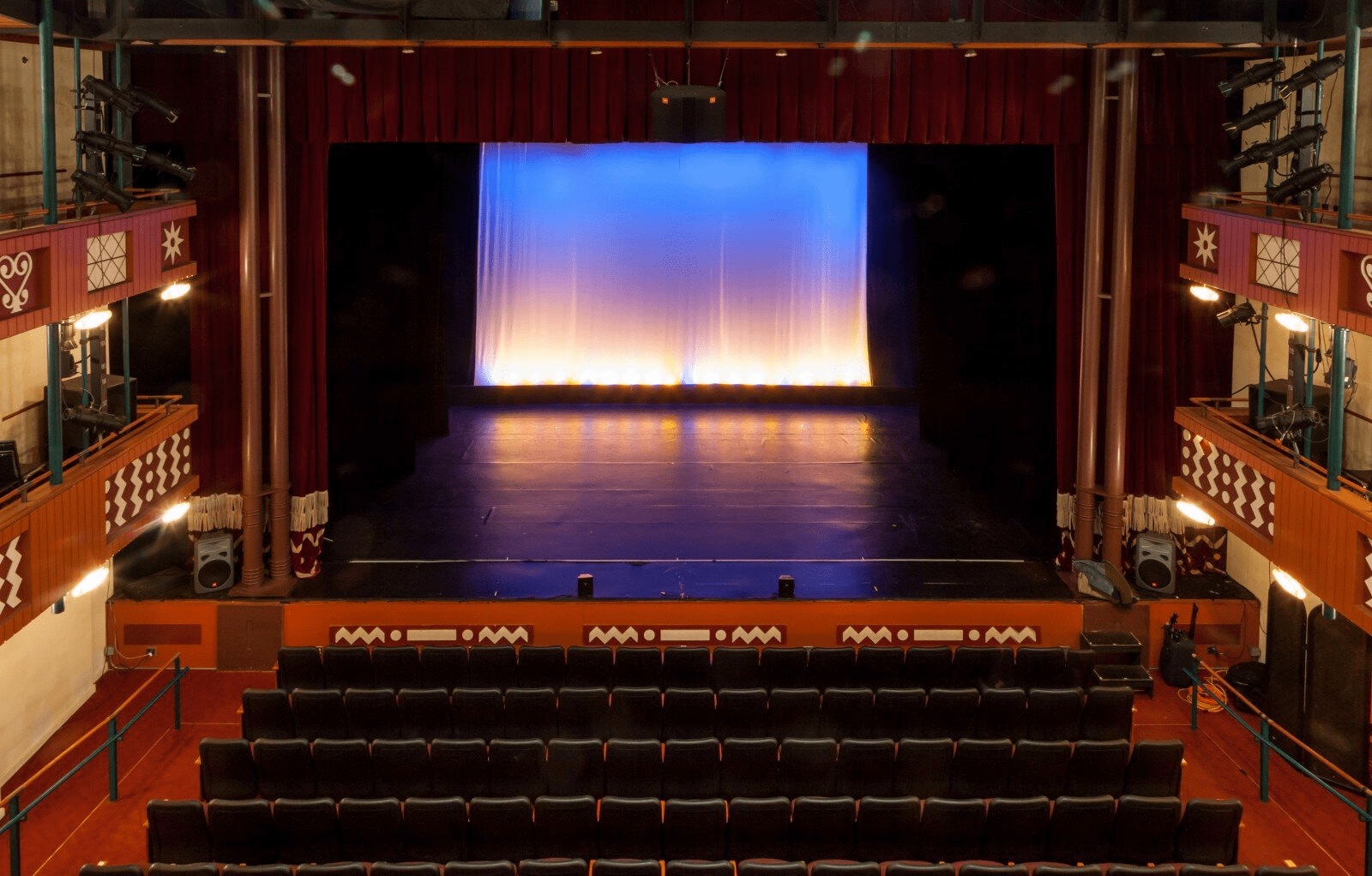
In addition to its main theater, the building includes classrooms, utility spaces, a private lobby, and a 299-seat proscenium stage. This stage was originally the entirety of John E. Allen Jr.’s theater. The building was later expanded, but all its unique features and the theatrical heart from which its story began were preserved. Learn more about Philadelphia’s New Freedom Theatre.
The History of the New Freedom Theatre Building
This building was constructed in 1853. Its original owner was brewer William Gaul. Soon after, it was acquired by the renowned Philadelphia actor Edwin Forrest, for whom one of the city’s other theaters is named.
Forrest debuted in 1820 on the stage of the Walnut Street Theatre. Six years later, he played the title role in *Othello* at a New York theater. He later performed the same role at the Bowery Theatre, which brought him immense popularity. Audiences snapped up tickets as soon as they went on sale, and theaters were always packed. Edwin Forrest quickly became one of the highest-paid actors in the United States. Moreover, he was even known outside of America, a rarity for the time. The actor’s popularity lasted for several decades. Unfortunately, his reputation was later damaged by a scandalous divorce and rivalries with other actors. Throughout this time, Edwin Forrest lived in the house at 1346 North Broad Street.
After his death in 1872, it served as a home for retired actors. From 1880 to 1960, the building was passed to the Philadelphia School of Design for Women. During that time, a studio was added to the rear of the building. For the next eight years, the premises were owned by the Philadelphia Cotillion Society.
The Founding and Early Days of New Freedom Theatre
The theater’s story began in 1966. Its founder was John E. Allen Jr., who was working at the Sun Oil Company at the time. He only left that job in 1973 to focus entirely on managing the theater.
The first home of the New Freedom Theatre was a building owned by Temple University. Two years after its founding, with the help of Robert E. Leslie Sr., the theater moved into the Edwin Forrest House. The theater hall was designed for 299 seats. The building was also equipped with rehearsal halls, classrooms, and meeting rooms.
It’s worth noting that the neighborhood was quite dangerous at the time. It was an area with drug trafficking, prostitution, and frequent fights. Allen personally negotiated with local criminals to ensure they would not disturb the patrons and students studying acting there. Eventually, the city installed more streetlights, and the crime rate gradually decreased.
In 1990, the theater was acquired by the Pennsylvania Historical and Museum Commission. This organization facilitated its first reconstruction and the repair of rooms that needed it.
The Theater’s Activities After the Founder’s Death
After the death of John E. Allen Jr., Walter Dallas took the helm of the New Freedom Theatre. He had previously been the head of the theater program at the University of the Arts in Philadelphia. Dallas transformed the theater into an Actors’ Equity house and began to develop collaborations with other theaters and theater professionals across the U.S. to draw attention to his institution. Under his leadership, $10 million was raised, a reconstruction was carried out, and the theater reopened for the 1996 season.

The artistic director was Indo-Caribbean and American artist and educator Rajendra Ramoon Maharaj. He staged such well-known productions at the theater as Jamaica, The Ballad of Trayvon Martin, Don’t Bother Me, I Can’t Cope, The Colored Museum, and A Walk Through Time.
The executive director was Sandra Norris Haughton, known as an expert in creating turnaround strategies for struggling cultural institutions. She led the development of a transformational strategy for the New Freedom Theatre, which helped to fully restore its activities and gave the theater a second wind.
The Theater’s Educational Activities
It should be noted that throughout its history, the New Freedom Theatre has been not only a theater for audiences but also an educational center. It runs educational programs for various age groups—from elementary, middle, and high school to adult students. The curriculum includes theater theory, mastery of traditional and contemporary performance skills, and aspects of technical production.
The success rate for school-age students reaches 98%, which is significantly higher than the city’s average. Furthermore, 85% of high school graduates continue their education at institutions of higher learning.
Famous alumni of the theater include:
- Erika Alexander,
- Leslie Odom Jr.,
- Wanyá Morris,
- Samm-Art Williams.
Thus, the New Freedom Theatre is a renowned theatrical and educational center in Philadelphia, and its building holds significant historical importance.