


In the 1920s, the Boyd Theatre was created as a movie palace. It operated for a long 74 years. But its story came to an end in 2002. So what was the path of the famous theater in Philadelphia? Read more at philadelphia-trend.
CREATION AND SCREENING OF FAMOUS MOVIES
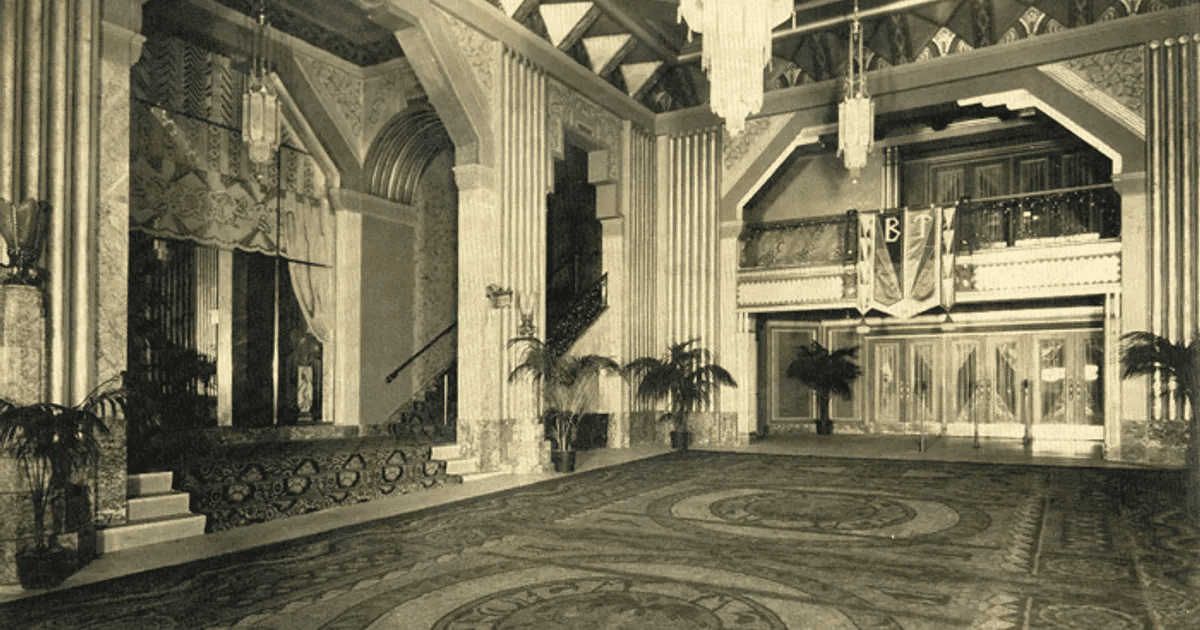
In 1928, the incredibly beautiful Boyd Theatre opened in the city of Philadelphia. It became quite popular because the Art Deco architecture was like nothing seen before. The interior decoration also attracted audiences.
Later, the building was sold to the famous company Warner Bros. Under this sign, musicals and premieres of numerous films began to be shown here. Such movies as The Wizard of Oz and Gone with the Wind could be seen on the screen.
In 1953, all movie theaters owned by Warner were transferred to Hollywood Studios. The name changed to RKO-Stanley Warner Theatres. In the same year, the Boyd Theatre underwent reconstruction and improvements. Architect William Howard Lee was hired for this purpose.
During the renovations of the building, a new curved marquee, ticket booth and a huge screen were added. The theater became quite popular among the residents of Philadelphia. It even became the first to host the screening of Ben-Hur, Judgment at Nuremberg, Becket and Doctor Zhivago.
FREQUENT SALES
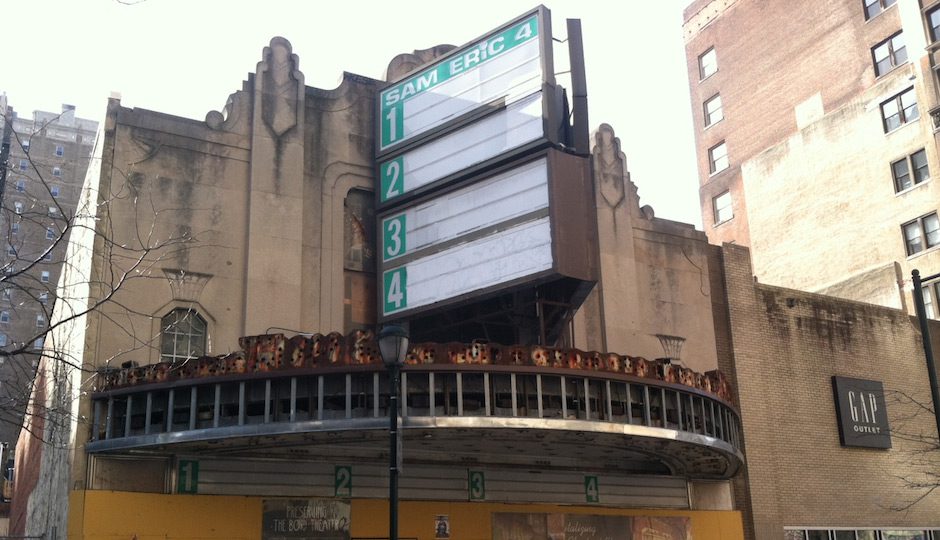
In 1971, the Boyd Theatre was sold again. This time it was acquired by the Sameric Corporation and renamed the Sam Eric Theatre after its current owners. Later, the establishment reopened and in honor of this event, the film Fiddler on the Roof was shown.
The new company tried to improve the state of the theater. Therefore, in 1982, two new halls were added to the premises of the building, each designed for 450 seats, and in 1985, another one with a capacity of 225 seats.
A significant event also took place at the theater. Visitors lined up for the world premiere of the movie Rocky III.
The venue was sold again in 1988 to the United Artists Circuit corporation. In 1998, it was bought out by local entrepreneurs.
ANOTHER WORLD PREMIERE AND THE DEMOLITION OF THE BUILDING
In 1993, screens exploded with the incredibly atmospheric film Philadelphia. Since the movie was shot in Philadelphia, it’s not surprising that the city was chosen for the premiere. In 1993, the Oscar-winning film was presented at the Boyd Theatre.
The first screenings of films continued until May 2, 2002. This date marked the end of the theater, as the company United Artists left it. Then the owner, Goldenberg, decided that demolition of the building was the best solution. He even obtained permission for this. But in June of the same year, citizens who were against such barbarism organized a new committee to save the theater. Later, this group of individuals founded the organization Friends of the Boyd, Inc.
2005 brought new hope for the theater, as it was bought again and not slated for destruction. Restoration work began on the building. However, something went wrong again, and in 2006, work was halted. Developer Hal Willner announced a reopening in 2008. But the building was misfortunate once again. The Philadelphia architect was unable to fulfill his promise as he passed away in 2010.
But the Friends of the Boyd, Inc. organization continued to work for many years to preserve the last remaining movie palace in the city.
THE BOYD THEATRE – A SUBSTANTIAL PART OF HISTORY
In 2002, the Boyd Theatre was recognized as a historic landmark in Pennsylvania. The building was one of ten that faced disappearance. In 2008, the theater was listed in the Philadelphia Register of Historic Places.
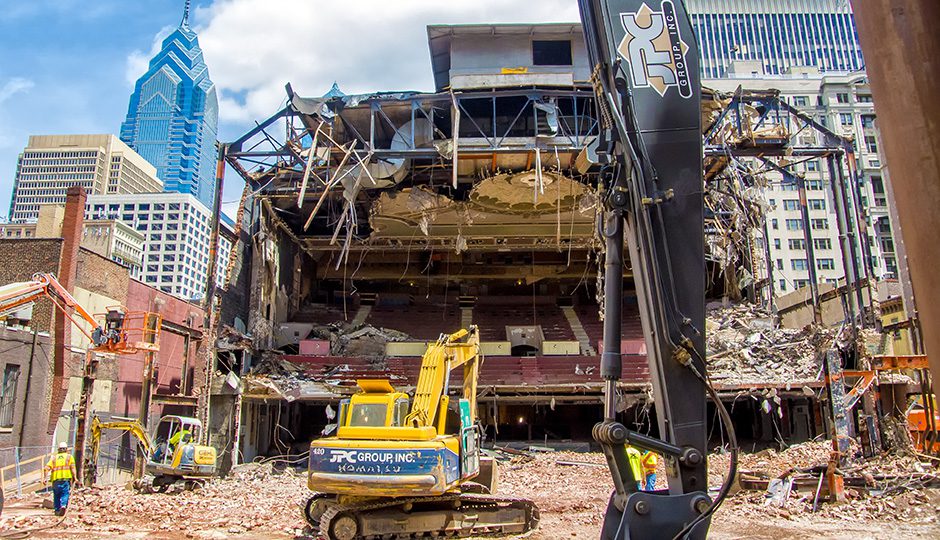
If entrepreneur Neal Rodin had bought the Boyd Theatre in 2013, the building’s fate would have been tragic. The Friends of the Boyd, Inc. immediately reacted to the situation. Its representatives offered to buy the landmark for 4.5 million dollars, but this never happened. The Philadelphia Historical Commission approved the demolition of the building.
Now, at the site of the once-popular theater, you can only see an ordinary residential complex surrounded by a sports bar-restaurant. Fortunately, the establishment serving alcohol was closed. Although this does not change the fact that the architectural monument has undergone significant changes and will never be the same as it once was.