


Rayner Taylor was a British and American musician who combined European traditions to form his own American style and approach to music education. As a young man, he was a singer, and later became a composer, organist, and music teacher. He immigrated to the U.S. in 1792 and three years later moved to Philadelphia, where he lived and worked for the rest of his life. We tell you more about the life and work of this composer on philadelphia-trend.
Rayner Taylor’s World of Music as a Child and Young Man
In April 1759, three thousand people gathered at Westminster Abbey to pay their last respects to the composer George Handel. The service was accompanied by a boys’ choir from the Chapel Royal. One of the young choristers, a boy named Rayner, leaned forward to get a better look at the grave. In that moment, his hat slipped from his head and fell into the open burial vault.
Young Rayner didn’t know that he, too, would become a famous composer and that 30 years later, he would travel to a far-off America, where he would live and work in the city of Philadelphia, performing Handel’s works for the public. But let’s go back to the beginning of his journey.
The boy was born in London in 1747. His parents were likely refugees from France. His exact date of birth is unknown, as is what his family did for a living. It’s possible his parents were involved in the theater world. Regardless, at around the age of 10, they sent their son to the Chapel Royal, where he became a chorister. The boys there were educated and also participated in performances at various events, such as the funerals of famous people. So, Rayner not only received excellent basic musical training but also participated in events such as:
- the funeral of George II,
- the coronation of George III,
- the funeral of composer Handel.
When the young man’s voice began to change as he matured, he left his work as a chorister and began studying organ and musical composition with Samuel Arnold. At 18, he got a job as an organist in Chelmsford. In 1765, Rayner became a composer and musical director at a London theater and held that position for a quarter of a century.
Move to the U.S. and Musical Career in Philadelphia
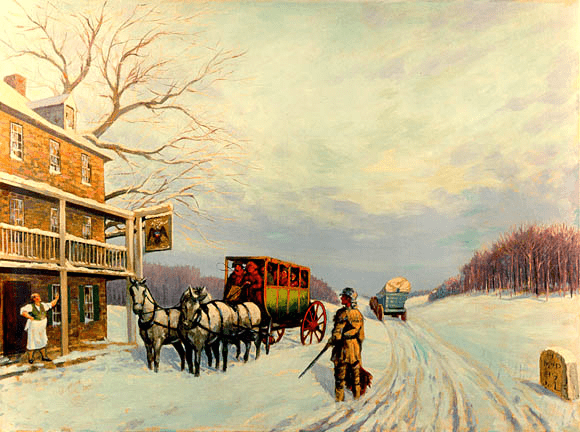
In London, Rayner Taylor was a fairly well-known figure; newspapers wrote about him, and citizens loved to hear him play. However, the ambitious composer wanted more, and in 1792, he sailed to the U.S. at the invitation of his student, Alexander Reinagle.
He first arrived in Baltimore, where he became a music teacher and hosted concerts. He called them “musical spectaculars.” They were unusual but popular with the public. Taylor then moved to Annapolis, where he became the organist at St. Anne’s Church. In 1795, he moved to Philadelphia, where he would remain for the rest of his life. Soon after his arrival, a yellow fever epidemic began in the city. The composer didn’t leave Philadelphia. Instead, he wrote a hymn in remembrance of the somber event.
He continued his work as an organist at St. Peter’s Church and held that position until 1813. Taylor became one of the central figures in the city’s musical life at the time. He was a popular music teacher, wrote works for churches and theaters, and arranged concerts for the public. Along with other composers, Rayner helped found the Musical Fund Society in 1820. As a performer, he loved to improvise on the organ and perform comedic theatrical songs.
In 1809, Rayner Taylor became a U.S. citizen. During the War of 1812, he arranged military music for piano and two flutes at Camp DuPont in Delaware.
The Composer’s Later Years
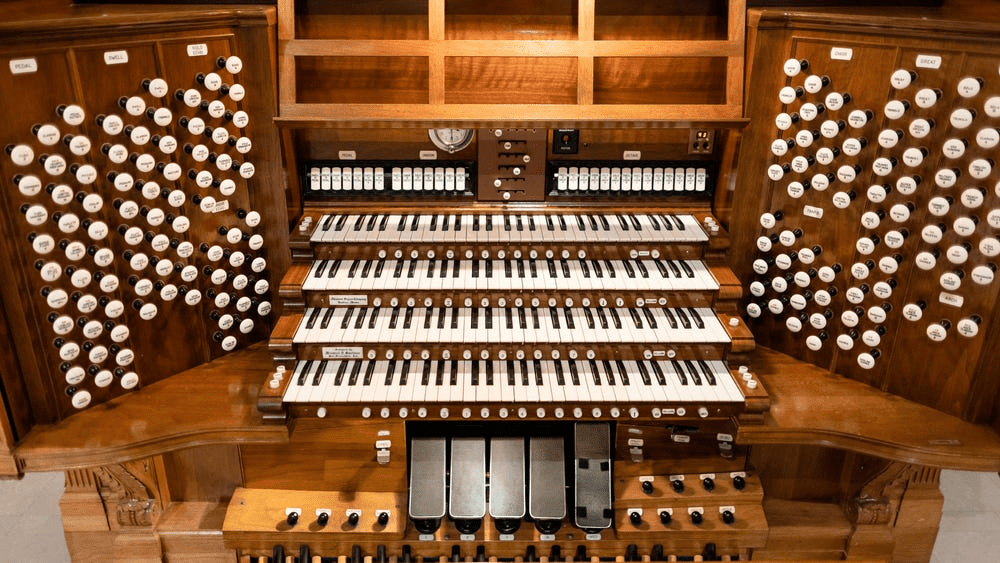
Until the end of his life, Taylor collaborated with the Philadelphia Handel Society. In 1815, he even sang tenor arias from the works of the composer whose funeral he remembered from his childhood. He also performed Handel’s organ concerts for the public. According to composer Benjamin Carr, Rayner Taylor had no equal as an organist, and his student, Alexander Reinagle, compared his teacher’s skills and mastery to those of Bach. His talent captivated audiences, and his music was enchanting. He became no less famous in the U.S. than he had been in his homeland.
Despite this, Taylor was alone at the end of his life. He was not able to accumulate great wealth. The composer and organist passed away on August 17, 1825, in Philadelphia at the age of 78. His gravestone was erected with financial assistance from the Musical Fund Society of Philadelphia.
Despite a long career, the respect of his contemporaries, and writing music for numerous theaters and churches, the memory of Rayner Taylor faded quite quickly. Moreover, most of his works were not preserved. A great violin concerto was lost, though an idea of it can be gleaned from a violin sonata whose sheet music was later found.
The preserved works of the composer are mainly piano pieces he wrote for his students. A few church hymns and theatrical songs also remain, which give a glimpse into Rayner Taylor’s talent and creativity. The only fully preserved theatrical work is The Ethiop, written in the U.S. Musicologists call its overture one of the best works of that time. It is from such fragments that contemporaries can form an idea of Taylor’s creative work.