


Composer Vincent Persichetti was born and raised in Philadelphia. From an early age, he was fascinated by music, particularly playing the piano and organ. His parents supported their son’s passion, and he went on to receive a thorough education in music theory, conducting, and composition. He later worked at the Curtis Institute of Music, where he met his future wife. Throughout the 1950s, Persichetti created concertos, sonatas, and orchestral works that are still celebrated today. We tell you more about his life and creative achievements on philadelphia-trend.
A Young Musical Genius
Vincent Ludwig Persichetti was born in Philadelphia on June 6, 1915. The family lived in the Italian section of South Philadelphia. Vincent Roger Persichetti and Martha Catherine Buch were not involved in the world of music, but their son showed a desire to learn to play the piano at just two years old. His parents agreed and found a teacher for little Vincent.
When the boy was four, the family moved closer to the center of Philadelphia. A few houses down the street lived a Mr. Combs, who founded a music conservatory. Vincent met him and often visited the music maestro, asking him about the secrets of the musical world.
Starting at the age of five, he studied piano with William Stanger. He later began to learn the organ and tuba as well. In 1921, at the age of six, Persichetti performed in his first piano recital. The performance was a success, and his amazing mastery of music at such a young age helped the boy get into the Combs Broad Street Conservatory of Music.
At the conservatory, Vincent immersed himself in the study of music theory. One of his teachers was Russell King Miller. As early as 1925, Vincent gave his first piano performance on the radio. He continued his studies, knowing that he wanted to become a professional musician and composer.
He gave his first public performance of his own musical works at age 14. As a teenager, Vincent performed frequently and worked as an accompanist to earn money for his own education. During his studies, he also worked as a church organist and played in orchestras and on the radio. Interestingly, the young man not only mastered music but also sculpture, which was his lifelong hobby.
Education and Career Start
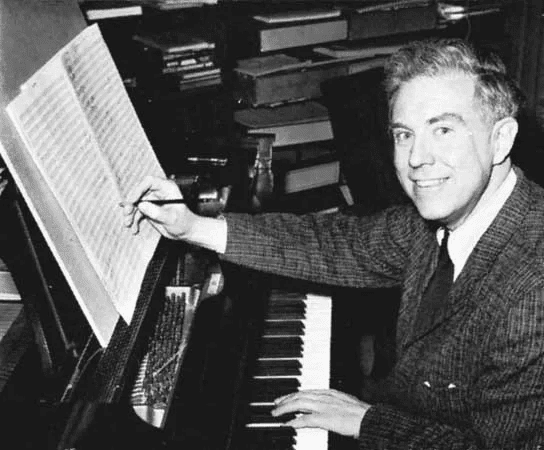
In 1935, Vincent’s piano teacher became the experienced pianist Olga Samaroff. The following year, he earned a bachelor’s degree and was appointed a teacher at the Combs College of Music.
Vincent continued his education at the Curtis Institute of Music and later at the Philadelphia Conservatory of Music, earning a master’s degree and a Ph.D. At the Curtis Institute, he was the head of the music theory department.
By the age of 35, the young composer had created many works that were well-received by audiences and colleagues. Composers like Igor Stravinsky and Aaron Copland admired his work. In 1947, he became a teacher at the Juilliard School of Music, where he worked for the rest of his life.
The Creative Legacy of a Famous Composer
Vincent found his unique voice in the 1950s. One of his most famous works was Concerto for Piano, Four Hands:
- This piece was first performed by Vincent and Dorothea Persichetti at the Pittsburgh International Festival of Contemporary Music in 1952.
- The composition featured two pianists who seemed to “converse” through music.
- Critics praised it as one of the most astonishing and interesting melodies in the American music scene of that time.
Another well-known work by the Philadelphia composer was Piano Sonata No. 10. It was written in 1955 and is considered one of his most complex and longest piano sonatas. Just one movement lasts twenty minutes. The music is charming, delicate, graceful, and dynamic all at once. Listeners are drawn into a meditative state while enjoying it.
Persichetti was a bold and audacious composer when it came to creating harmony and interaction between the orchestra and soloist. He always amazed his students and colleagues with this skill. It was most vividly demonstrated in his piano quintet titled Opus 66. He wrote it in 1954 for piano with string accompaniment. Similarly, his Symphony No. 5, or Symphony for Strings, was first performed by the Philadelphia Orchestra.
An important part of Persichetti’s musical legacy is the textbook 20th-Century Harmony: Creative Aspects and Practice. The composer taught for most of his life and mentored many talented students, including Philip Glass, Leonardo Balada, Einojuhani Rautavaara, Jacob Druckman, and Larry Thomas Bell, among others.
As for his personal life, in 1941, the composer married Dorothea Flanagan, whom he had met at the Curtis Institute of Music. She was also a pianist and composer. The couple had a daughter, Lauren, who became a dancer.
Vincent passed away on August 14, 1987, in his hometown of Philadelphia, leaving behind a significant creative legacy and a wealth of beautiful, unique music.