


Historically, Southwark Theatre is considered to be the first theater in Philadelphia to be built for the purpose of showing plays to the public. It was opened in 1766. The place was the first permanent theater in the city, and even the first in the United States. The famous John Street Theatre in NYC began its operations a year later. Unfortunately, this historic building in Philly did not survive until the XXI century. But it was replaced by other theaters, and some of them are still operating. Read more on philadelphia-trend.
History of the first city theater
The development of theater in Philly has been going on since the mid-eighteenth century. The first performances were held wherever there was enough space. In 1749, Plumstead Warehouse became a permanent “theater”. There are even posters from that time inviting the audience to watch plays there. However, it was not a theater in the modern sense.
Theater was gaining popularity, so soon the question of building a real theater arose. This was realized in 1766, when the building later known as Southwark Theatre rose at the intersection of Fourth and South Streets on the southern outskirts of Philly.
It was founded by an American company headed by David Douglas, who for 30 years always used this building during their tours to the city. The theater was designed for about 800 people and became the first such facility in the US.
Theater work, competition and decline
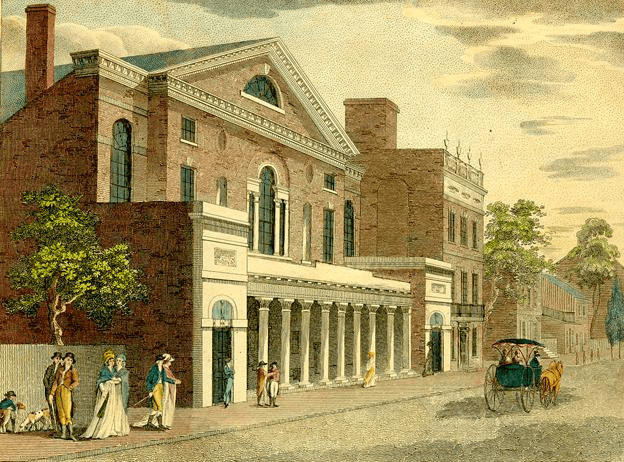
On April 24, 1767, the theater hosted the premiere of The Prince of Parthia by American Thomas Godfrey. It was a landmark event, as the audience had previously watched only plays by foreign authors.
The theater continued to operate and was the only such institution in the city until the Chestnut Street Theatre was built and opened in 1794. The latter became more popular and soon turned into the main theater venue in Philly.
The Chestnut Street Theatre was even called a new theater. Its construction was overseen by Thomas Wignell and Alexander Reinagle. In 1791, they managed to convince local investors of the need to build a modern theater. The project was realized on the corner of Sixth Street opposite Congress Hall. The cost of construction was $30,000. The theater’s decoration lasted until 1805.
This theater had a stage 71 feet deep and 30 feet wide. The auditorium had three tiers and was designed for 2,000 visitors. There were several dressing rooms and two entrances. In 1816, this theater was lit with gas lamps for the first time in the US. Given the novelty of the project at the time, the theater was often called the wonder of America. This encouraged even more viewers to watch performances there.
At the same time, Southwark Theatre was slowly declining:
- In 1817, the building was no longer used as a theater venue.
- Four years later, a fire broke out here. After this, the building was turned into a distillery.
- In the early twentieth century, it was demolished.
As for the Chestnut Street Theatre, it also suffered a fire around the same time as Southwark Theatre. The cause of the fire was never determined, as the building was unoccupied, and the troupe was on tour. However, two years later, the theater was rebuilt on the same site and continued to operate. This building existed until 1855.
In 1862, the theater was rebuilt in another location and operated until 1913. Then it was closed due to a falling curtain during a performance and never reopened. The building itself was demolished in 2017.
Further development of theater in Philly
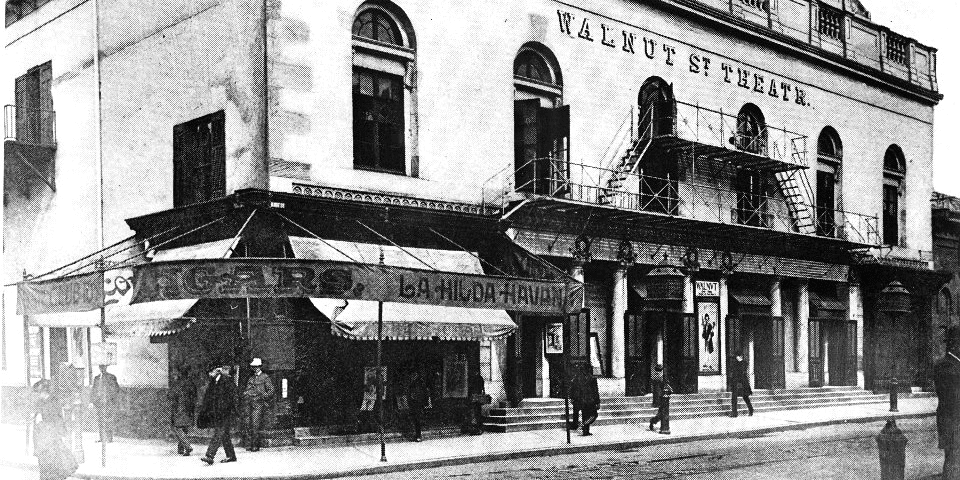
Another famous theater venue in Philadelphia in the XIX century was Walnut Street Theatre, which opened in 1809. It was the tallest building in the city for a long time. It was also the first to install an air conditioning system.
In the 1880s, the building was extensively reconstructed, and a new stage was installed. In 1920, the interior was again slightly changed. Throughout the twentieth century, this institution remained one of the central venues of Philadelphia’s theater life. Many premieres were shown here, which later became American classics. In 1940, the building was purchased by the Shubert Organization.
In 1964, the building was recognized as a National Historic Landmark. Five years later, it was reconstructed and transformed into Center for Theater Arts. The range of artistic events organized there expanded to include not only plays but also music concerts and dances. In 1976, it was here that the first televised presidential debate was organized.
In the twenty-first century, Walnut Street Theatre continues to operate alongside many new theaters that have been built in Philly. In 1982, its management changed, but the theater remains a traditional and favorite venue for watching performances. It regularly hosts a variety of cultural events, and nearly 50,000 people have annual subscriptions.
Thus, for three centuries, Philadelphia has been a city of theaters and theatergoers. Here, the traditions of this ancient art are preserved and innovations are boldly introduced.