

The history of theatrical arts in Philadelphia is a fascinating narrative of cultural conflict and the struggle for freedom of expression. Founded by William Penn as the utopian “Holy Experiment,” Pennsylvania was long under the strong influence of Quaker (Puritan) ideals. These religious traditions considered stage spectacles to be licentious and wasteful, directly contradicting the ethics of hard work and modesty. As a result, Philadelphia, unlike other colonial cities, fiercely resisted the development of professional theater for decades. You can read more about the difficult and thorny path of theater in Philadelphia at philadelphia-trend.
Religious Resistance
In the early 18th century, the dominant religious community in Pennsylvania—the Quakers—held a firm anti-theatrical stance. This powerful ethical movement significantly hampered the development of the arts. Quakers perceived the acting profession as deceitful and stage performances as a direct source of immorality and profligacy. They were deeply convinced that such entertainment distracted citizens from labor and virtuous living, undermining the foundations of social stability.
This strict ethical guideline was officially enshrined in legislation, creating a true cultural barrier. While permanent theater companies were already active and local drama was developing in other American colonies, such as New York or Charleston, Philadelphia, as the main center of Quaker influence, long remained a forbidden zone for them. The city’s cultural development was strictly subservient to rigid religious views.
The First Ban: The Act of 1700
Philadelphia’s early legislation, heavily influenced by strict religious ethics, directly prohibited public spectacles that diverted citizens from a virtuous life. As early as 1700, the colonial authorities passed an act aimed at ensuring public morality.
The document directly banned “celebrating, gaming, drunkening, and other like debaucheries.” Although the word “theater” was not explicitly mentioned, theatrical performances unequivocally fell under the broad general definition of “indecency” and “waste of time.” This legislative restriction reflected the deep conviction of the authorities that the stage was a source of social disorder.
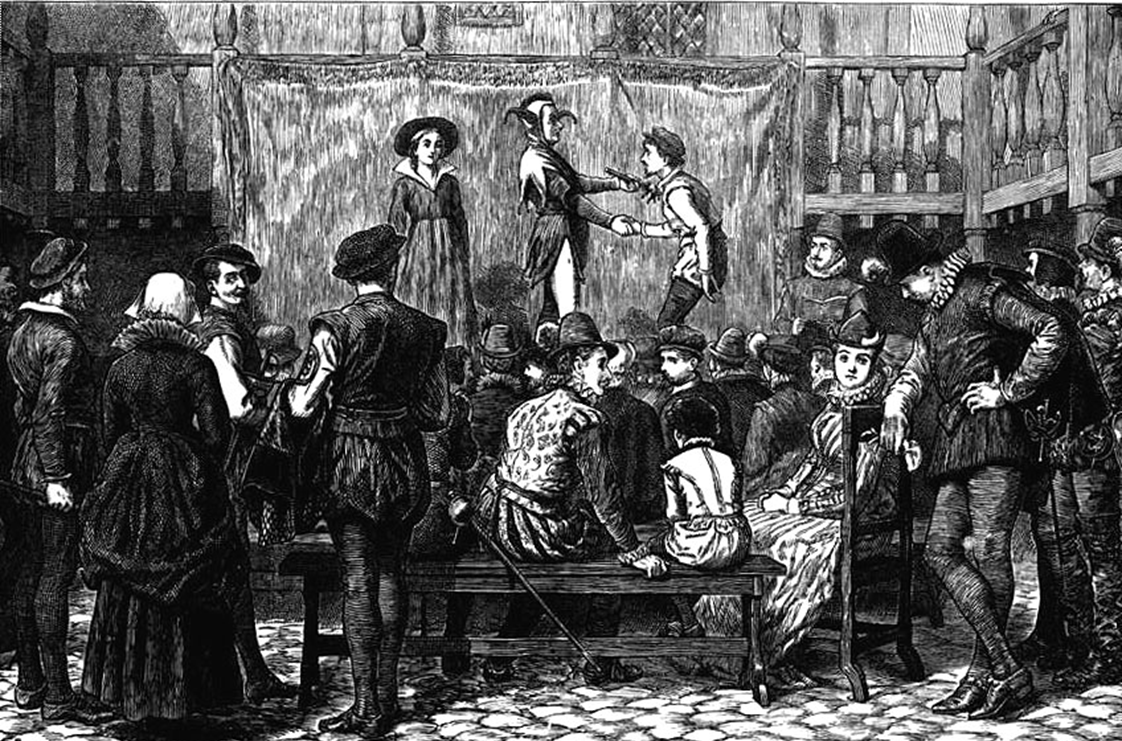
Even when the first traveling theater companies began appearing in the 1740s, they could not operate openly. Actors constantly faced administrative pressure and strong public condemnation from the faith community.
To bypass the strict rules and avoid fines, troupes were forced to disguise their performances by resorting to deception. They advertised their plays and comedies as “Moral Lectures,” “Historical Readings,” or “Dialogues.” This tactic allowed them to formally comply with the law while secretly satisfying the growing demand from the non-Quaker population for dramatic arts.
The English Invasion
The situation changed dramatically in the middle of the century thanks to the arrival of the Lewis Hallam’s Company of Comedians (later known as the Hallam-Douglas Company) from London. In 1754, this troupe arrived in the city. They were met with hostility but had a significant impact.
- They received support from wealthy merchants and military officers who did not share the Puritan views.
- The troupe constructed a temporary stage on the outskirts of the city.
- Their performances, though criticized, became immensely popular among a segment of the elite and foreigners.
This English company effectively broke the unofficial taboo on professional stage art, laying the groundwork for the first permanent theater.
The Second Legislative Blow: The Act of 1786
Following the triumphant end of the War of Independence, when it seemed America had cast off all old restrictions, the struggle for the arts flared up with renewed, no less intense, force. The conflict between strict religious principles and the rising secular needs of society reached its climax.
In 1786, conservative groups, invariably supported by influential Quaker leaders, delivered a powerful blow to the theatrical community. They succeeded in pushing through a harsh law that was much more targeted than its colonial predecessors. This act specifically banned all theatrical performances in Pennsylvania, openly and directly declaring them detrimental to public morals and civil order. This was a blatant attempt to restore Puritan standards in the capital of the newly free nation.
This decision was a genuine insult to the new intellectual and commercial elite. Imagine: Philadelphia at that moment was not just a city, but the country’s largest urban center and its de facto capital. Many residents felt that such a ban was absurdly outdated, provincial, and disgraced the city’s status as the center of republican ideas.
The fight for the right to the stage quickly turned into a political confrontation. Theater supporters, who included those who had just fought for independence, launched an active lobbying campaign. They argued that theater was not debauchery, but rather a powerful means of civic education that instilled ethical principles and republican virtues. It was this organized political will of the intellectuals that ultimately overcame religious conservatism, paving the way for the law’s repeal.
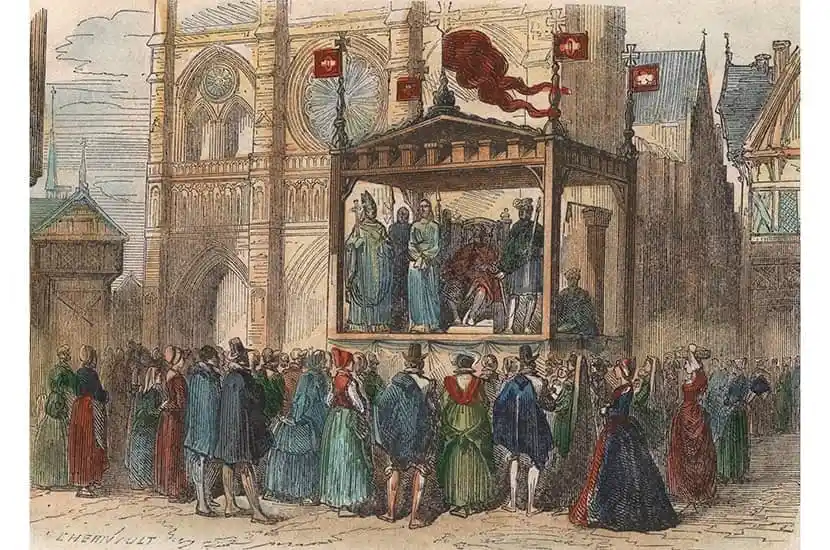
Victory of the Enlightenment
A key figure in this struggle was Governor Thomas Mifflin, a veteran of the War of Independence and a supporter of the Enlightenment. Under pressure from the public and the intellectual elite, he secured the repeal of the anti-theater law of 1786.
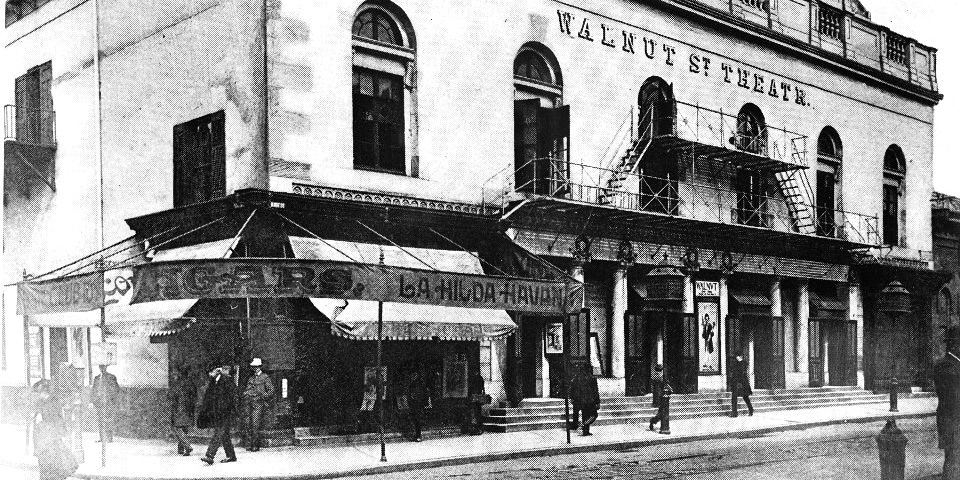
This occurred in 1789. The legalization of theater allowed for the construction of new permanent venues in Philadelphia, including the Walnut Street Theatre. This establishment opened in 1809 and remains America’s oldest continuously operating theater. The victory over the ban symbolized Philadelphia’s transition from a rigid theocratic ethic to the liberal cultural policy embraced by the republic.
The Final Curtain
As we can see, the evolution of theater in Philadelphia is not just a story about the opening of a few buildings. It is a vivid testament to the struggle of the Enlightenment against Puritan orthodoxy. Philadelphia, born as a city of Quaker severity, became a battleground where the right to freedom of expression clashed with deeply entrenched religious censorship.
Theater here was not a welcome guest but an underground dissenter. For decades, actors were forced to perform under the guise of “moral readings,” and supporters of the stage had to prove that drama was not a “devilish trick” but an educational tool necessary for the formation of a conscious citizen of the new republic.
That is why the repeal of the strict legislative acts became not just an administrative decision, but a symbolic victory of secular, pluralistic America over dogmatism. When official theater buildings finally appeared in Philadelphia, they embodied not only entertainment but also the opening of a new chapter in the city’s cultural history—a chapter where education and art gained the right to coexist with religion. Thus, Philadelphia gave the stage its freedom, and the stage repaid the city by transforming it into a cultural capital.

