

While most of the 90s hip-hop scene relied heavily on samples and drum machines, Philadelphia introduced the world to a band that challenged the entire industry. The Roots are more than just a legendary collective. They represent a movement that fundamentally redefined the genre, bringing live instrumentation, jazz improvisation, and brilliant freestyle to the stage. Their unique sound and sheer determination transformed Philadelphia into a hub that fused intellectual rap with the raw energy of live music. We tell the story of how The Roots managed to pioneer unique “live hip-hop,” become a cultural icon, and yet preserve their authentic Philadelphia roots on philadelphia-trend.com.
The Birth of a Legend
The band’s true history didn’t start in expensive recording studios; it began in the modest halls of the Philadelphia High School for Creative and Performing Arts (CAPA). It was there, as young students, that the two key founders met: Tariq Trotter (Black Thought) and Ahmir Thompson (Questlove). They immediately connected over a shared musical passion.
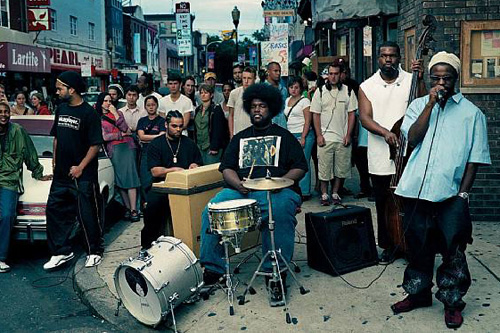
The collective initially performed under the name The Square Roots. Their first and most vital rehearsal space was the streets of Philadelphia. The musicians earned money by street performances—a practice known as “busking”. They especially favored the corner of East Passyunk Avenue and South Street. This was a period of raw, live energy. Thompson, using improvised buckets as a drum kit, created complex rhythms, while Trotter masterfully delivered his freestyles over the live beats.
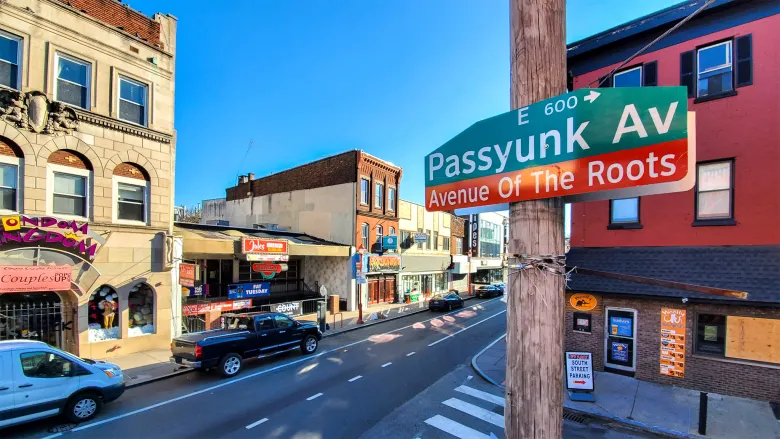
For The Roots, Philadelphia is much more than just a birthplace. The city became an inexhaustible source of inspiration and authenticity. The Philadelphia authorities even immortalized this connection: a section of East Passyunk Avenue was renamed the “Avenue of The Roots.” This gesture underscored the band’s unwavering commitment to promoting their hometown. The streets where they started became the definitive symbol of their unique “live hip-hop.”
A Musical Anomaly
In the 1990s, as hip-hop was divided between New York’s boom-bap and West Coast G-funk, The Roots carved out a unique niche. Their key differentiator was the use of live instruments instead of traditional sampling. This established them as the first legitimate live hip-hop band in history.
- A Genre Fusion. Their sound is an organic blend of hip-hop, jazz, neo-soul, and classic R&B.
- A Virtuoso Rhythm Section. Questlove is renowned for his incredible sense of timing and attention to detail, while former bassist Leonard “Hub” Hubbard provided deep, “heavy” basslines.
- Lyrical Depth. Black Thought’s lyrics focused on sharp social issues, political commentary, and self-reflection, giving their work significant intellectual weight.
The debut album Organix (1993) and the breakthrough Things Fall Apart (1999) cemented their reputation as some of the most creative performers in the game.
A Hub for Talent
A key informal creative collective, known as the Soulquarians, emerged around The Roots and their Philadelphia base. This was an influential group of artists and producers working at the intersection of hip-hop, soul, and R&B. Questlove, in particular, acted as the crucial link uniting these brilliant individuals.
The collaborations within this collective included such major names as:
- D’Angelo
- Erykah Badu
- Common
- Jill Scott
Many of these artists recorded their landmark albums in Philadelphia and New York studios, with The Roots serving as the primary session band, providing the rhythmic and compositional foundation.
The TV Transformation
In 2009, the band made an unexpected move that permanently altered their career trajectory and public perception. They became the house band for American late-night television, joining “Late Night with Jimmy Fallon.” They later moved with Fallon to the more prominent “The Tonight Show.”
This role seemed peculiar for underground idols, but it showcased their versatility and humor. They don’t just perform musical numbers; they participate in comedy sketches, accompany global stars with unusual arrangements (like playing on children’s instruments), and improvise in the “Freestylin’ With The Roots” segment. This move allowed them to significantly broaden their audience, introducing complex musical material to millions of new listeners.
Evolution and Legacy
The band was born in and has remained inextricably linked to its homeland, Philadelphia, which serves as their ideological center. Their journey began with street performances, where they honed their craft. The key moment for the group was their stylistic innovation. They revolutionized hip-hop by replacing standard sampling with live instrumentation, fearlessly merging the energy of rap with complex jazz arrangements. A prime example of this is their breakthrough 1995 album, Do You Want More?!!!?!
A distinctive feature of their work is the constant rotation of participating members. This only emphasizes the unchanging role of the founders: rapper Black Thought and drummer Questlove. For instance, the early lineup included keyboardist Scott Storch, who later became a renowned producer.
The Roots’ impact on culture is enormous. They built a new genre bridge, successfully connecting underground authenticity with mainstream accessibility. This is best exemplified by their enduring role as the house band on the popular American show “The Tonight Show.” For their creative body of work, The Roots have received widespread acclaim, notably a Grammy Award for their iconic song “You Got Me” in 2000.

