


The Academy of Music in Philadelphia was built between 1855 and 1857. Despite its name, it was never intended to be an educational institution. The Philadelphia Academy of Music is the oldest opera house in the United States. It’s also home to the local ballet and was the longtime home of the city’s orchestra. In 1962, the building was designated a National Historic Landmark. Learn more about this Philadelphia opera house, whose opulence rivals that of Milan’s, on philadelphia-trend.
Construction of the Academy of Music
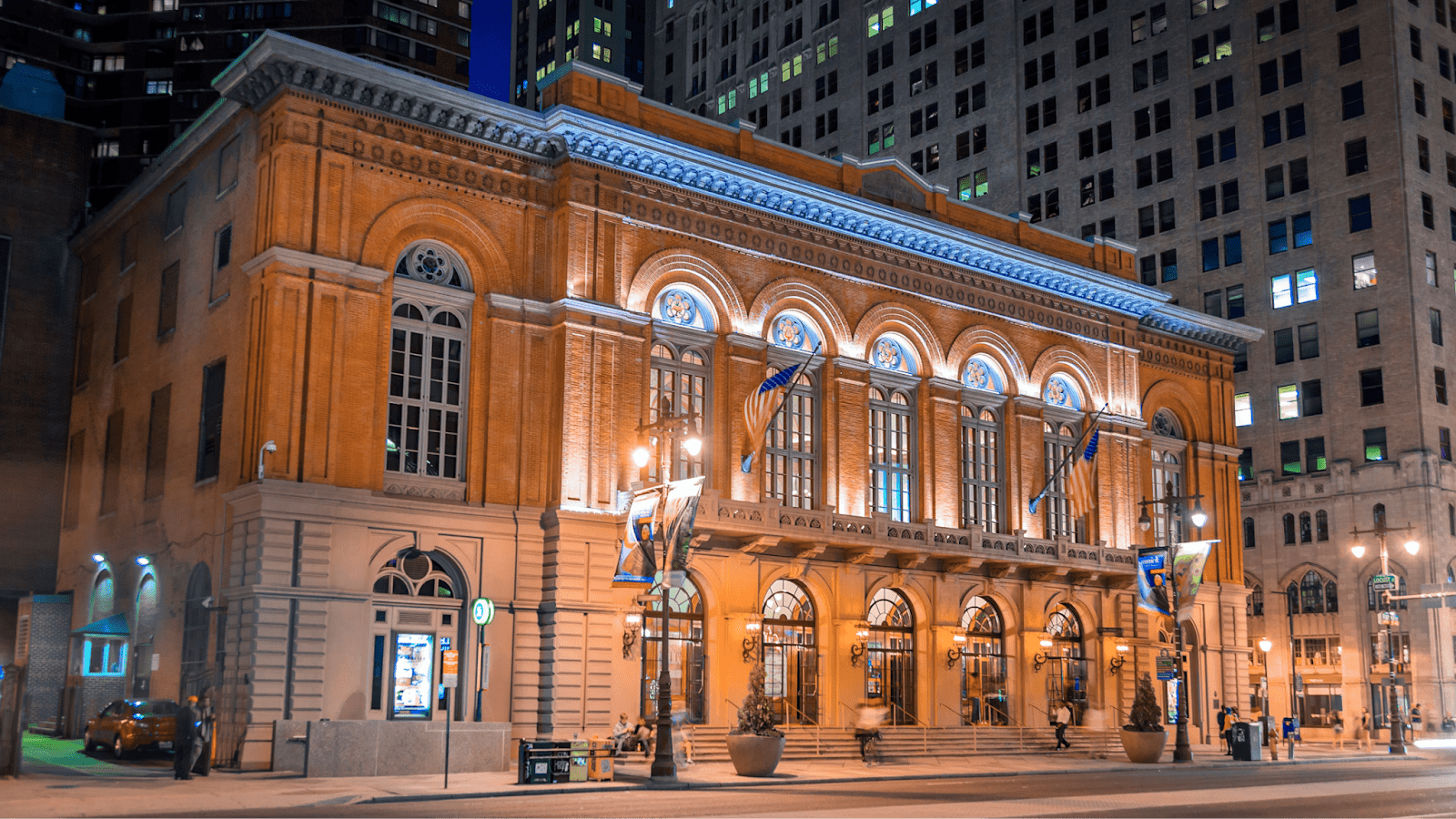
A competition for the design of a new opera house in Philadelphia was announced in 1854. The firm of Napoleon LeBrun and Gustav Runge won with a “round arch” style design. The cornerstone for the future Academy of Music, located at 240 S. Broad Street, was laid on June 18, 1855. The ceremony was attended by U.S. President Franklin Pierce.
The architects designed a relatively simple exterior for the building to allocate more funds for the interior decoration. They chose brownstone and brick as the main materials, with a plan to later cover them in marble.
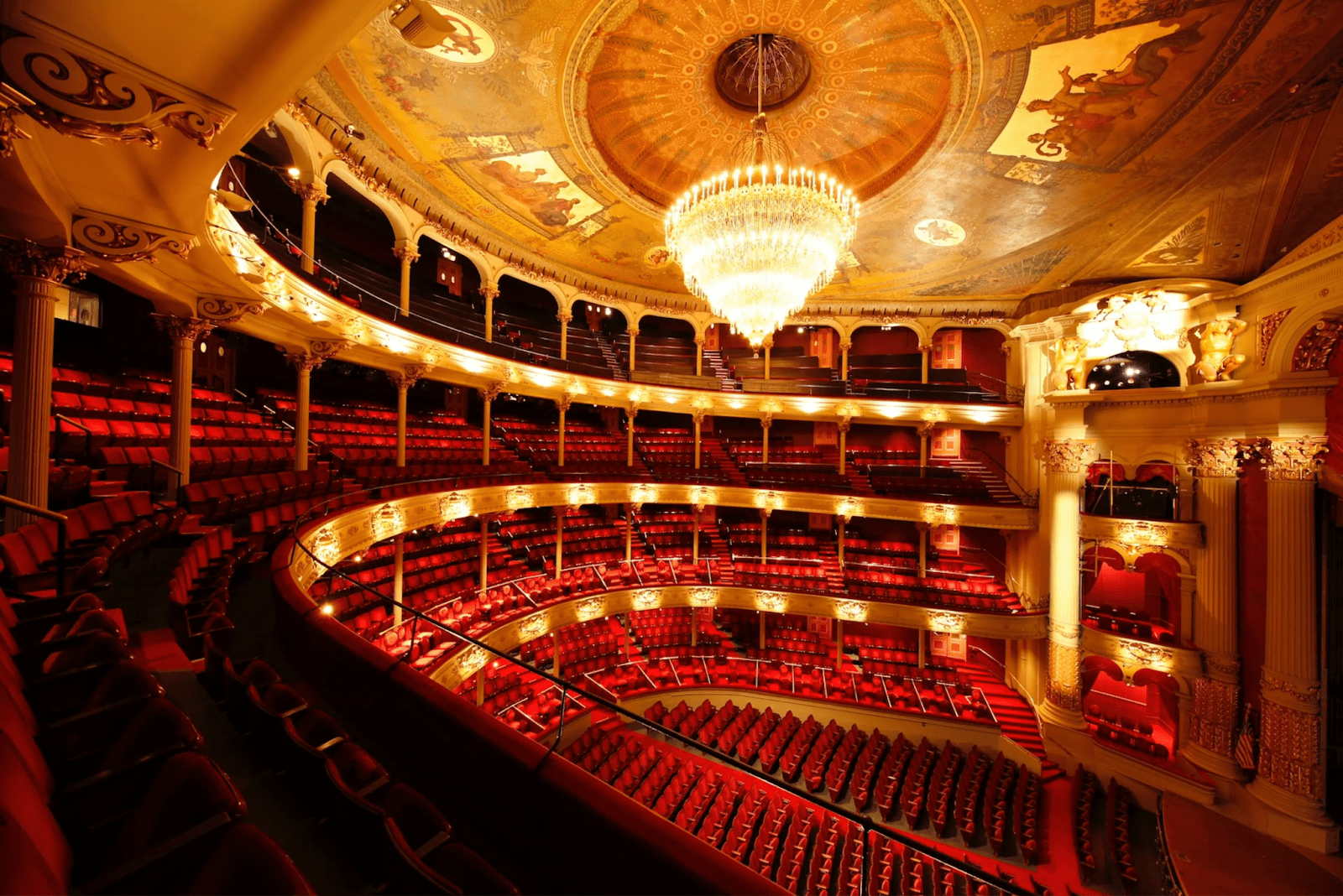
Inside, they created an elegant, horseshoe-shaped auditorium, adorned with a magnificent crystal chandelier. A sturdy brick wall was built around it and covered with pine boards for better sound insulation. The balconies were arranged in several tiers and supported by columns. At the time of its opening, the hall seated 3,000 people and could be emptied in just four minutes thanks to a system of wide corridors and staircases.
The crystal chandelier had a diameter of 16 feet and weighed 5,000 pounds. The gas lighting in it was replaced with electricity in 1900. In 1957, an electric winch was installed to lower it. Before that, it took 12 men four hours to lower it by hand. In 2008, the chandelier was completely restored.
The interior of the hall was decorated with exquisite carvings and gilded wooden sculptures by Charles Buschor and Joseph A. Bailly. The ceiling was adorned with frescoes by Carl Hermann Schmolze and was repainted in the 1880s. The main curtain was made of cherry-colored fabric with gold-colored fringes, ropes, and tassels. A secondary curtain featured a painting of Italy’s Lake Como by artist Russell Smith. This luxurious interior created a special atmosphere for the audience.
The Opening of the New Opera House
In January 1857, the Academy of Music hosted its first public event: a ball. Afterward, newspapers wrote about the new opera house’s luxury, elegance, bright lighting, and beautiful decorations. The official opening took place on February 25, 1857, with a performance of Verdi’s Il trovatore by an Italian opera company. The conductor was Max Maretzek, who continued to bring his company to the Academy of Music regularly until 1873.
After its opening, the Philadelphia opera house operated continuously. World-famous performers, composers, and conductors appeared here, and a large number of opera premieres took place, such as Gounod’s Faust, Strauss’s Ariadne auf Naxos, and Wagner’s The Flying Dutchman. In 1916, the Philadelphia Orchestra premiered Mahler’s Eighth Symphony here.
Interestingly, the Academy of Music was home to more than just artistic events. In 1872, it hosted the Republican National Convention. Other public events were also organized here, such as a football match between the University of Pennsylvania and Princeton University in 1889.
The Academy of Music in the 20th and 21st Centuries
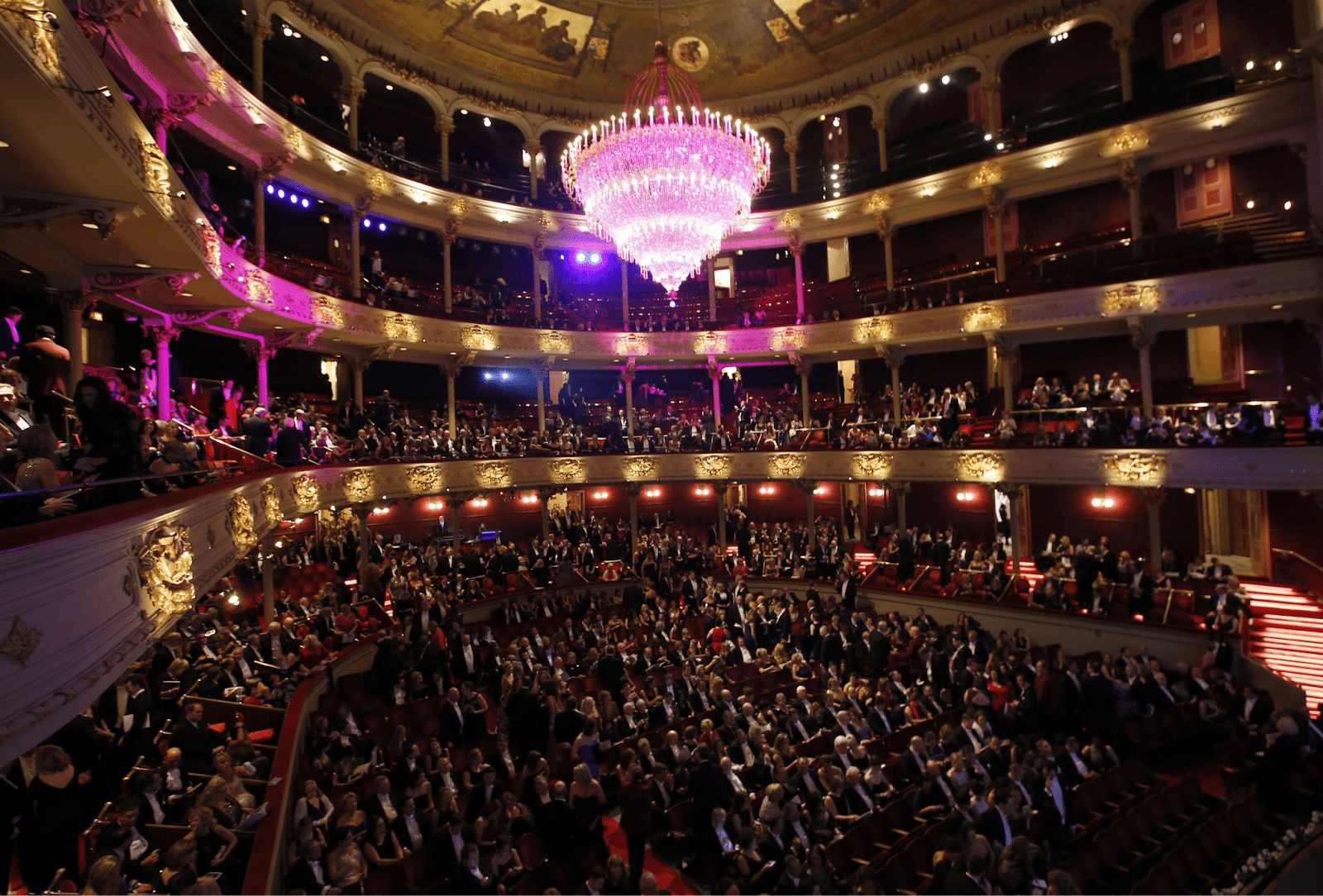
In the 20th century, the Philadelphia Academy of Music became a world-renowned and popular concert venue. The local ballet and opera continued to perform here, and global stars were constantly visiting. The stage has hosted performers such as Maria Callas, Enrico Caruso, Luciano Pavarotti, Vladimir Horowitz, Anna Pavlova, Itzhak Perlman, Gustav Mahler, Mario Lanza, Edith Piaf, Billie Holiday, Tony Bennett, Richard Strauss, Sergei Rachmaninoff, Isaac Stern, Igor Stravinsky, Joan Sutherland, Pyotr Tchaikovsky, and many other famous musicians.
In the 1990s, the Academy was used to film parts of Martin Scorsese’s film The Age of Innocence. The Academy of Music has also served as a venue for vocal and instrumental competitions, including the Pavarotti Competition.
When the Philadelphia Orchestra was founded in 1900, the Academy of Music became its home. The orchestra performed here throughout the 20th century. In 2001, it moved to the Kimmel Center for the Performing Arts but retained its ownership of the Academy of Music.
In 2007, the Academy of Music underwent a restoration thanks to a $5.3 million donation from Leonore Annenberg. A total of $12 million was raised during a concert for the Academy’s 150th anniversary to renovate the building.
In the 21st century, the Philadelphia Academy of Music began hosting many non-classical artists. The modern repertoire includes a variety of events, including Broadway shows, comedy performances, jazz concerts, and much more. This musical venue remains famous and popular among both residents and visitors of Philadelphia. It has retained its elegance while also becoming a place where contemporary art flourishes.