


At the beginning of the 20th century, many movie theaters opened in Philadelphia. The art of cinema was becoming widespread, and movie venues of the time were becoming luxurious and popular places for entertainment. One of the most famous theaters from that era, which operated in the city for over 70 years, was the Boyd Theatre.
Built in the Art Deco style, this movie theater changed hands several times and operated until 2002. After long debates and public opposition, the building was finally demolished in 2015. Learn more about its history on philadelphia-trend.
Construction and Opening of the Boyd Theatre
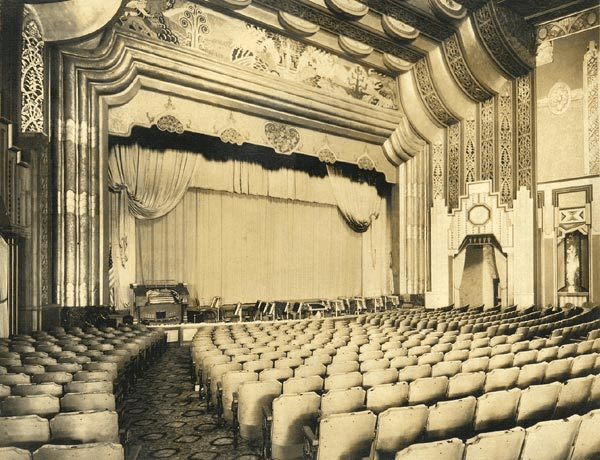
The Boyd Theatre was built for Alexander R. Boyd by the Philadelphia architectural firm “Hoffman-Henon Co.” The building became a true Art Deco masterpiece. The grand lobby was decorated with mirrors and covered in carpets. The three-level foyer also featured many mirrors. The auditorium had 2,450 seats (including the balcony), a stage, an organ, and an orchestra pit.
For its grand opening on Christmas Day in 1928, the theater screened the film Interference, starring Evelyn Brent and William Powell, short films featuring Ruth Etting and Eddie Cantor, as well as Walt Disney’s animated film Steamboat Willie, the cartoon The Toy Shop, and Movietone News.
The owner decided to sell the new theater quite quickly. It was purchased by Warner Bros., which also acquired the Stanley Co. During this period, most of the city’s theaters operated under the “Stanley Warner” brand.
The Boyd Theatre also began to be used as a venue for “Warner Brothers” musicals. In 1929, it showed On with the Show and Show of Shows, and in 1931, Hold Everything. The theater also hosted exclusive film premieres, such as The Life of Emile Zola and The Good Earth in 1937, The Wizard of Oz in 1939, and Gone with the Wind and Kitty Foyle in 1940.
In 1941, audiences were able to watch The Philadelphia Story here. Interestingly, an a play of the same name was also premiering at the local Forrest Theatre. The leading role in both was played by Katharine Hepburn. In 1945, Mildred Pierce was shown. In 1949, the famous Philadelphia opera singer Mario Lanza and actress Kathryn Grayson were present at the Boyd Theatre for the premiere of the film That Midnight Kiss. In the early 1950s, the theater screened films and cartoons such as:
- The Great Caruso,
- A Place in the Sun,
- Alice in Wonderland,
- A Streetcar Named Desire,
- The Greatest Show on Earth,
- High Noon (with Grace Kelly herself attending the premiere),
- Peter Pan and more.
Renovation and Continued Operations
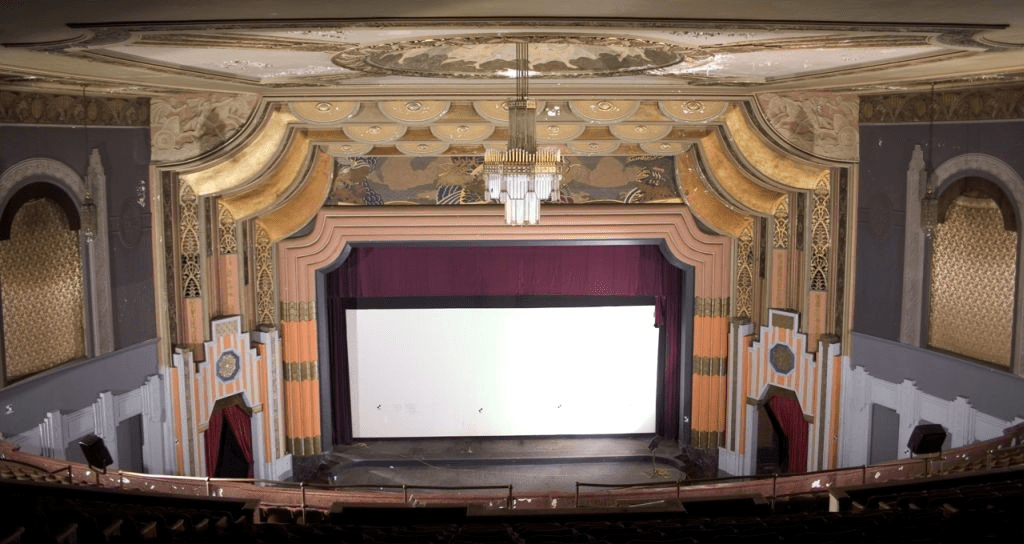
In 1953, the Hollywood studio divested itself of the Stanley Warner theaters due to the introduction of antitrust laws. That same year, renovations of the Boyd Theatre began under the direction of architect William Howard Lee. The exterior and interior were remodeled, a huge new screen was installed, and new ticket booths were added.
After reopening, the theater continued to be a popular destination. Tickets for the films shown there typically sold out in advance. In 1953, it was the only theater to screen This is Cinerama, which was seen by three-quarters of a million people over the course of a year. In 1963, How the West Was Won was shown for 39 consecutive weeks.
During this period, the Boyd Theatre also began to show a variety of imported films, such as Ben-Hur (1959), Judgment at Nuremberg (1961), Becket (1964), and Doctor Zhivago (1965). In 1967, it hosted the premiere of The Happiest Millionaire, which was attended by the cast.
In 1969, the theater hosted its last organ concert. Afterward, the instrument was donated to the Dickinson Theatre Organ Society in Delaware, where it is still used for concerts.
A New Era: The Sameric Theatre
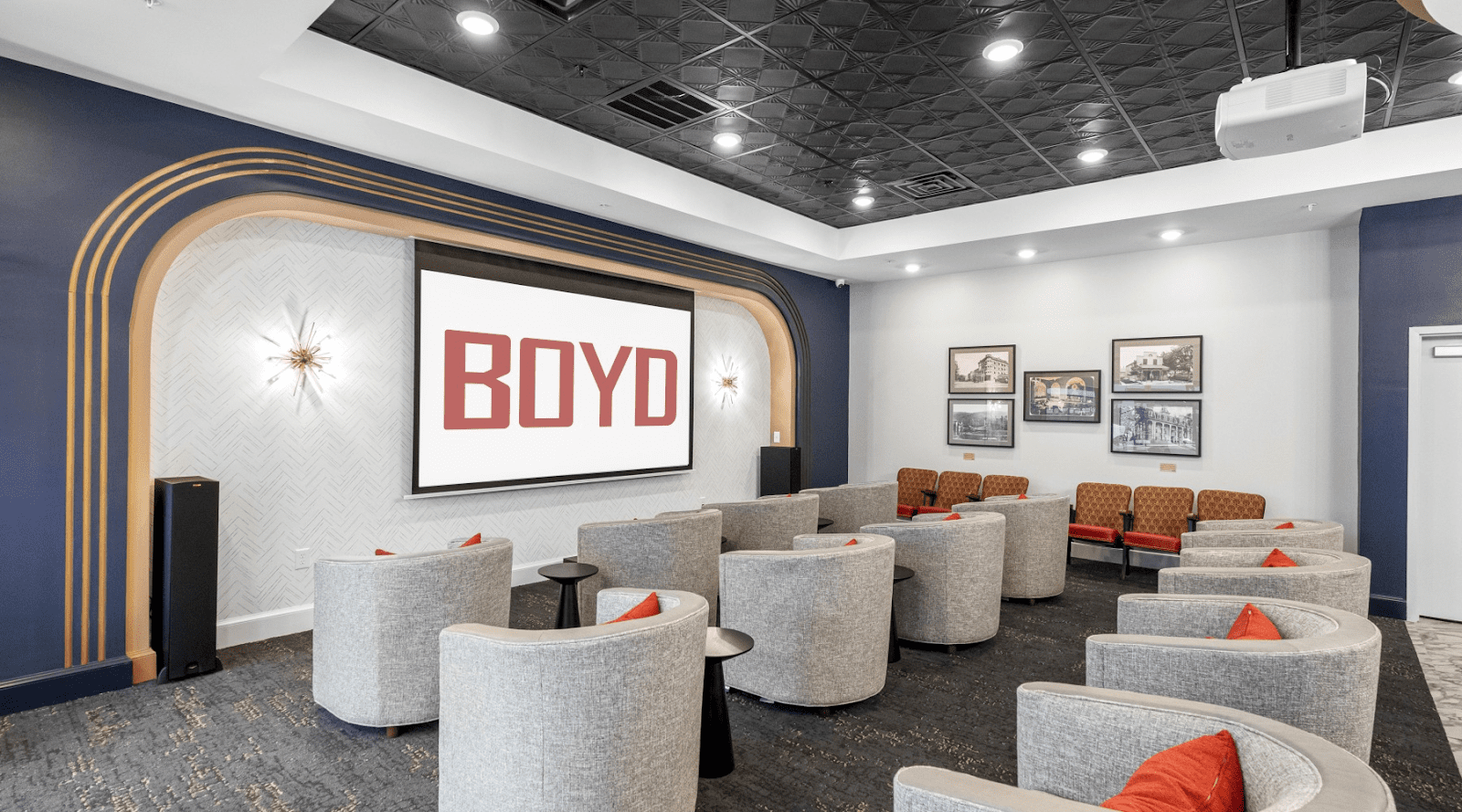
In 1971, the theater was purchased by the Sameric Corporation. It was renamed the Sam Eric Theatre, renovated, and reopened. Two years later, it hosted the world premiere of the film Battle for the Planet of the Apes. In 1982, it was the location for the world premiere of Rocky III.
In 1982, two more theaters from this chain, each with 450 seats, opened just west of the existing theater on Chestnut Street. In 1985, Sameric 4, with 225 seats, was opened. In 2007, these buildings were converted into retail spaces.
As for the former Boyd Theatre, the Sameric Corporation sold it to the United Artists Circuit in 1988. Ten years later, the building was purchased by the Goldenberg Group. Throughout this time, the movie theater continued to operate. In 1993, it hosted the world premiere of the Oscar-winning film Philadelphia.
This continued until May 2, 2002, when the movie theater was closed. The building’s owner immediately received permission for its demolition. However, concerned citizens created the “Save the Sameric Committee” and later founded the nonprofit organization “Friends of the Boyd, Inc.”.
Restoration or Demolition?
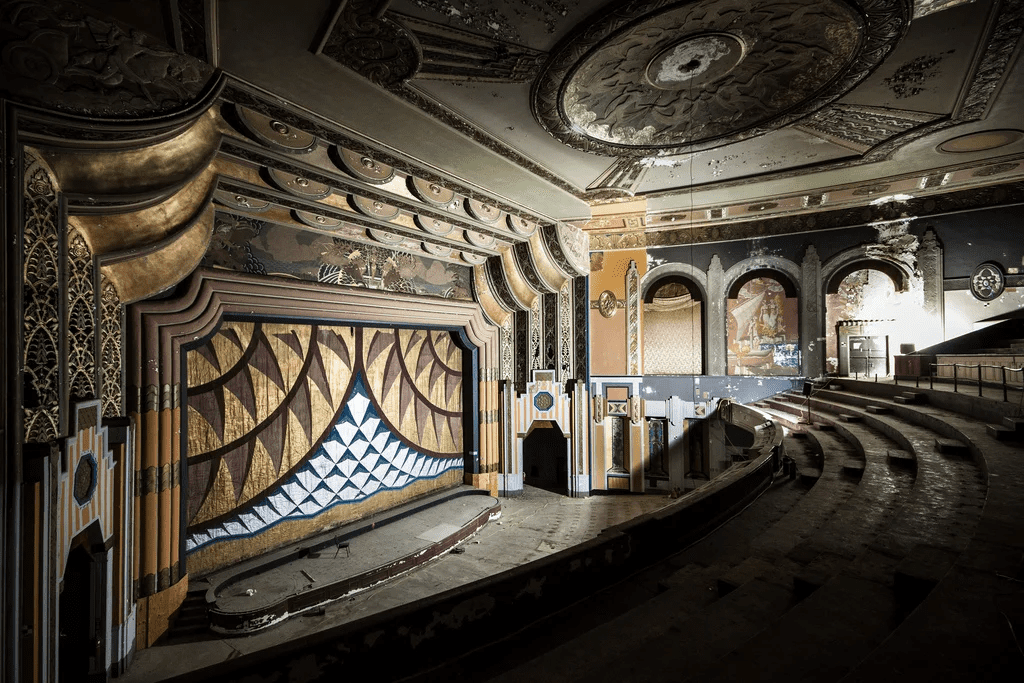
Over the next decade, debates about the future of the former popular movie theater continued. In 2005, it was purchased by Clear Channel, Inc., which began restoration with the goal of creating a theater with a film program. These works stopped a year later.
In 2008, Philadelphia developer Hall W. Wheeler announced his intention to buy, restore, and reopen the Boyd Theatre. Unfortunately, he passed away in 2010 before he could realize this plan. Meanwhile, the organization “Friends of the Boyd, Inc.” actively raised funds and informed the public why the building was important and should be restored rather than demolished.
It’s worth noting that the significance of the Boyd Theatre was recognized by many organizations:
- In 2002, the statewide organization Preservation Pennsylvania named the theater one of the 10 most endangered historic sites in the state;
- In 2008, the Preservation Alliance for Greater Philadelphia and the National Trust for Historic Preservation included the building on their list of endangered sites;
- That same year, the theater was added to the Philadelphia Register of Historic Places.
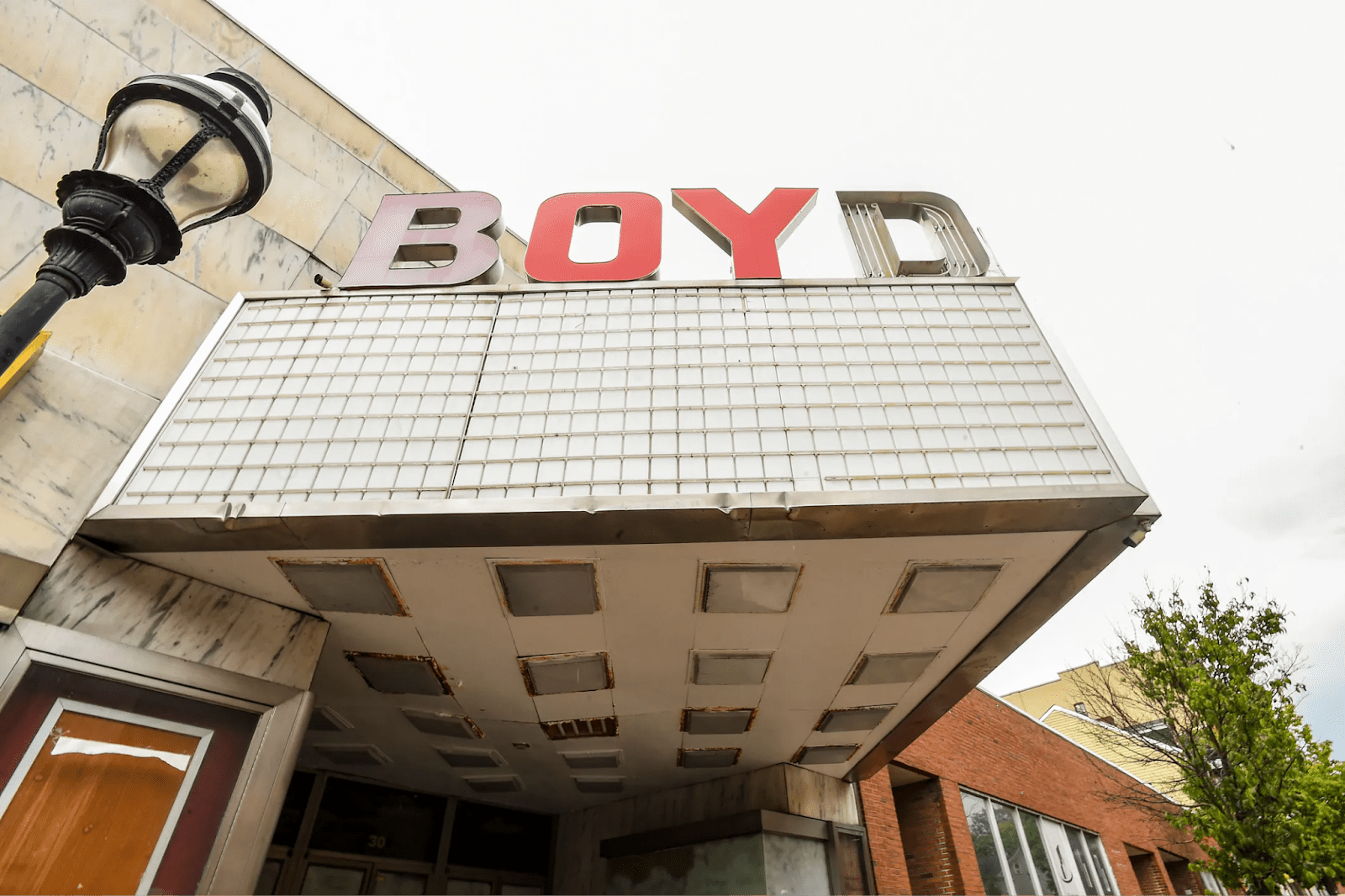
In 2013, it was announced that developer Neal Rodin planned to buy the movie theater and lease it to iPic Theatres. The plan was to demolish the entire building except for its facade, with the approval of preservation organizations. At that time, “Friends of the Boyd, Inc.” offered to buy the theater for $4.5 million. The Philadelphia Historical Commission disregarded this offer and approved the demolition permit.
In 2014, the building was purchased by Pearl Properties, and demolition began the following year. Three years later, construction of a residential tower began, which opened in 2019. The outer lobby of the former Boyd Theatre was preserved and enclosed in glass, with a view of Chestnut Street. This was the end of the story of a popular city movie palace, where for over 70 years, Philadelphians had watched premieres of world cinema.